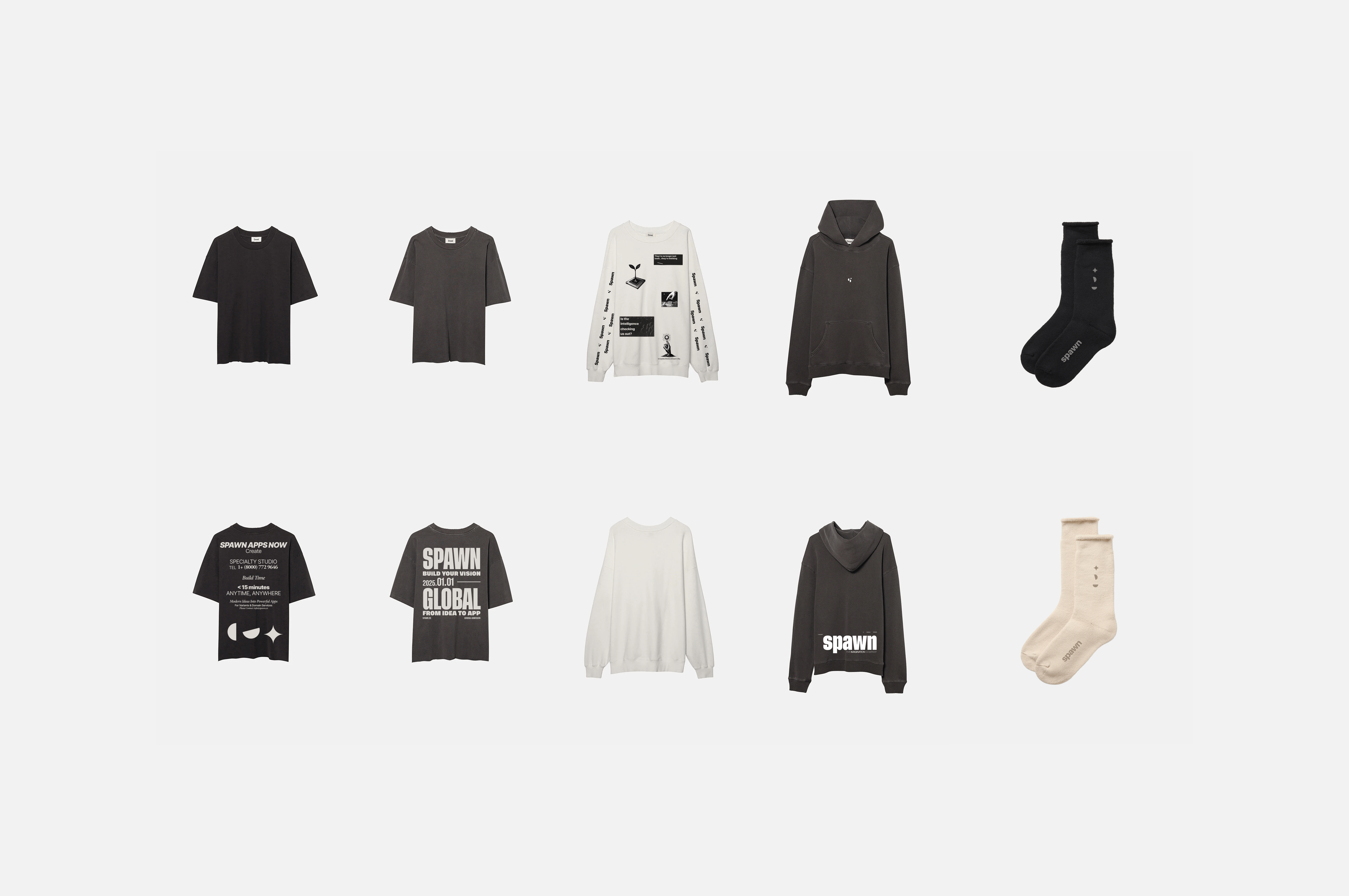
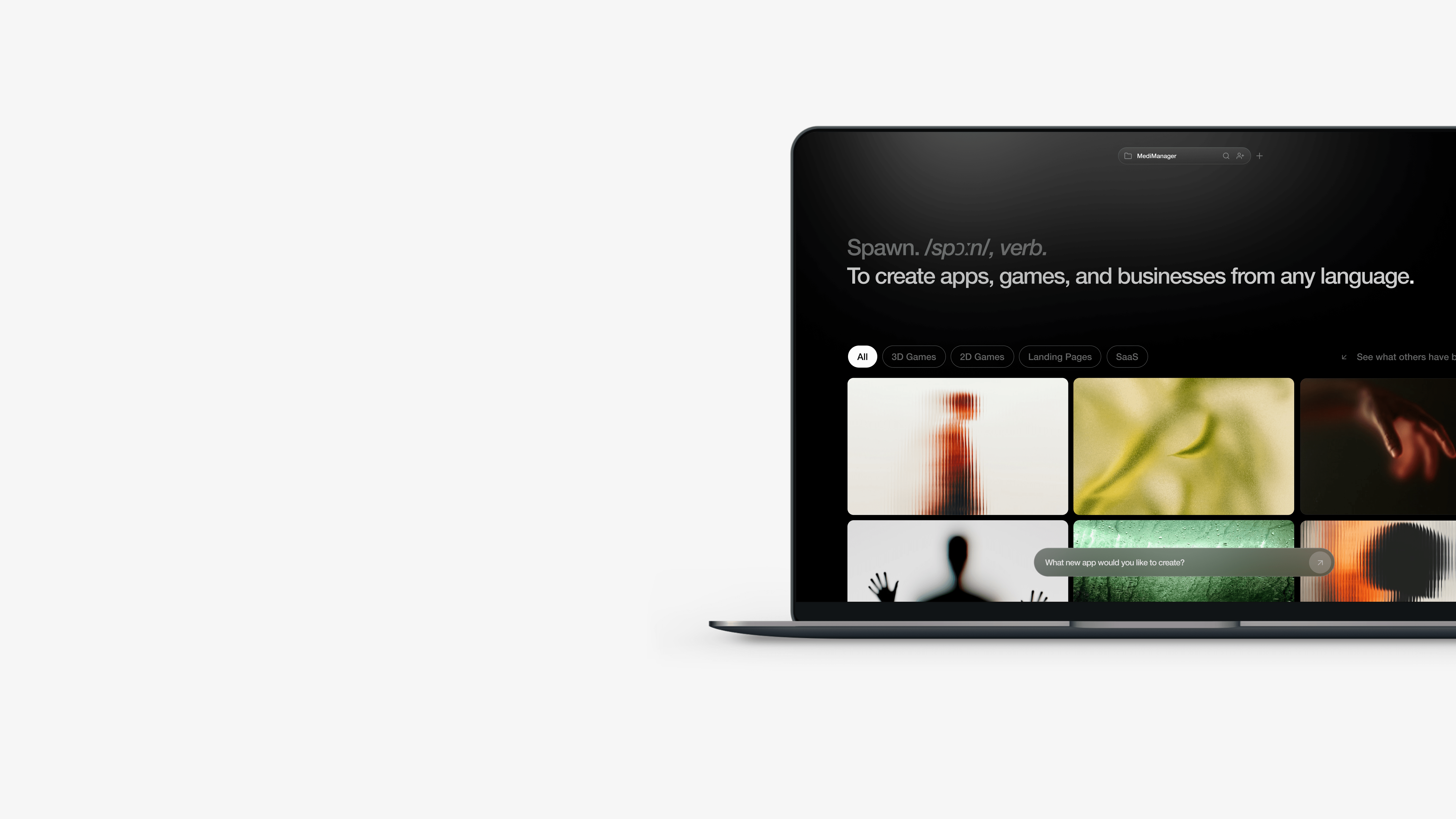
Spawn is a prompt-to-product platform for games and apps. Create a prototype in minutes, iterate with real feedback, and ship in one place—then let the community discover, play, and remix it, turning every launch into a loop that improves the next version.

Client
Spawn
2025
Position
Founding Product Designer
Company Size
Bailey Moses, Jacob Sansbury, George, Andy Thompson, Tiger Abrodi
Responsibilites
Defined Design System
Product Design
Co Owner Product
The Challenge
I was brought on before any designs existed, which meant the hardest part wasn’t execution—it was discovering the product’s design shape. There was no UI to inherit and no precedent to follow, so we needed momentum fast.

The name of the game was getting high-quality shots on the board: different ways to frame creation vs. consumption, different flows from prompt to prototype, and different models for publishing, discovery, and remixing.

Instead of perfecting one idea too early, we treated early design like a search problem—explore widely, compare options side by side, and let clarity emerge through contrast.

The team believed we’d recognize the right direction when we saw it; my job was to accelerate us to that moment, then expand the winning concept into a cohesive, scalable foundation.
Part 1
The Feed
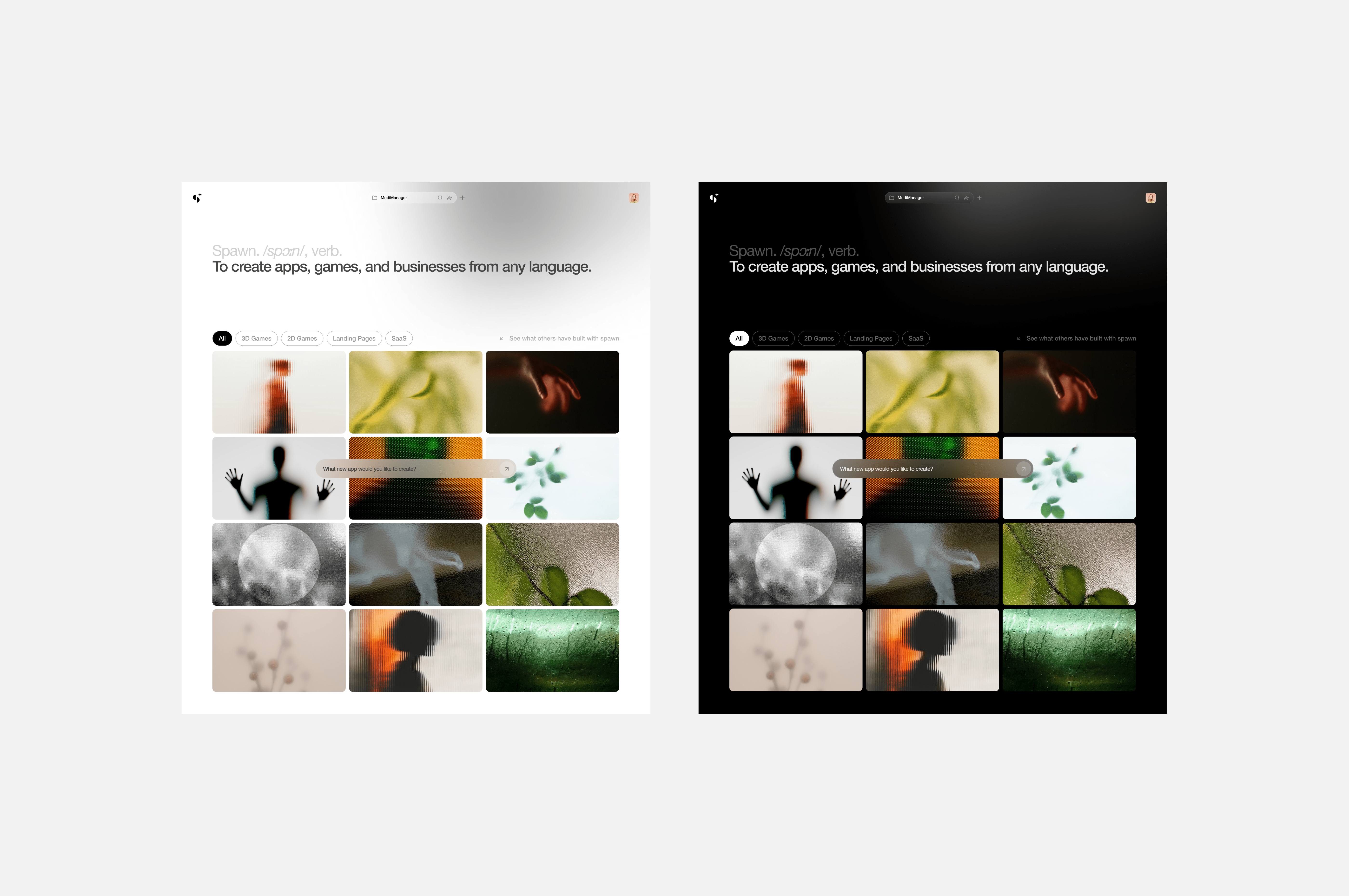
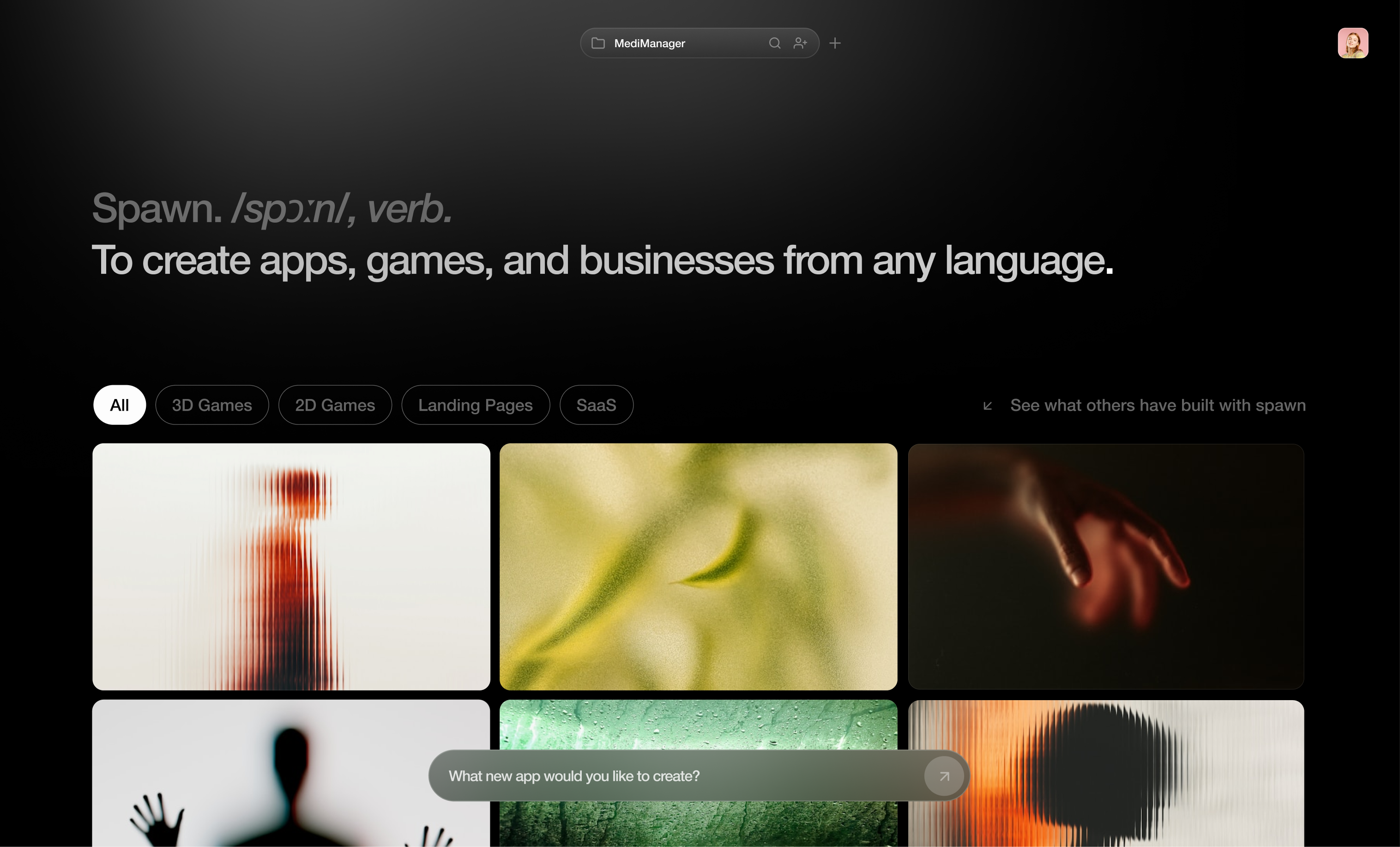
We started by focusing on the feed because we wanted it to be the main entry point into Spawn—where people could immediately discover what was possible, then jump into remixing or creating their own game/app.

It felt like the fastest surface area to generate signal: if the Feed didn’t make you want to click, play, and build, nothing else mattered.

So early exploration centered on different feed models—how to showcase creations, how previews should work, and how quickly someone could go from inspiration to action.
The Winner
This feed won because it let the content speak for itself. Large, immersive previews made. Each game is instantly legible without relying on titles, descriptions, or social context. Users could understand what they were looking at in seconds and keep moving, which was critical given the early, uneven quality of the library.
Why This Won
Instant comprehension through motion, not metadata
Strong sense of presence and immersion
Lower cognitive load while browsing
Works even when titles, tags, or creators aren’t strong yet
Key Takaway
Given our early stage, our biggest risk wasn’t discoverability - it was clarity. The immersive feed minimized explanation and maximized feel, which made it the strongest foundation for the rest of the product loop.
Part 2
Creation
Once the Feed direction felt solid, we shifted to the creation flow: how someone goes from “I want to make something” to a playable/usable first version with as little friction as possible.

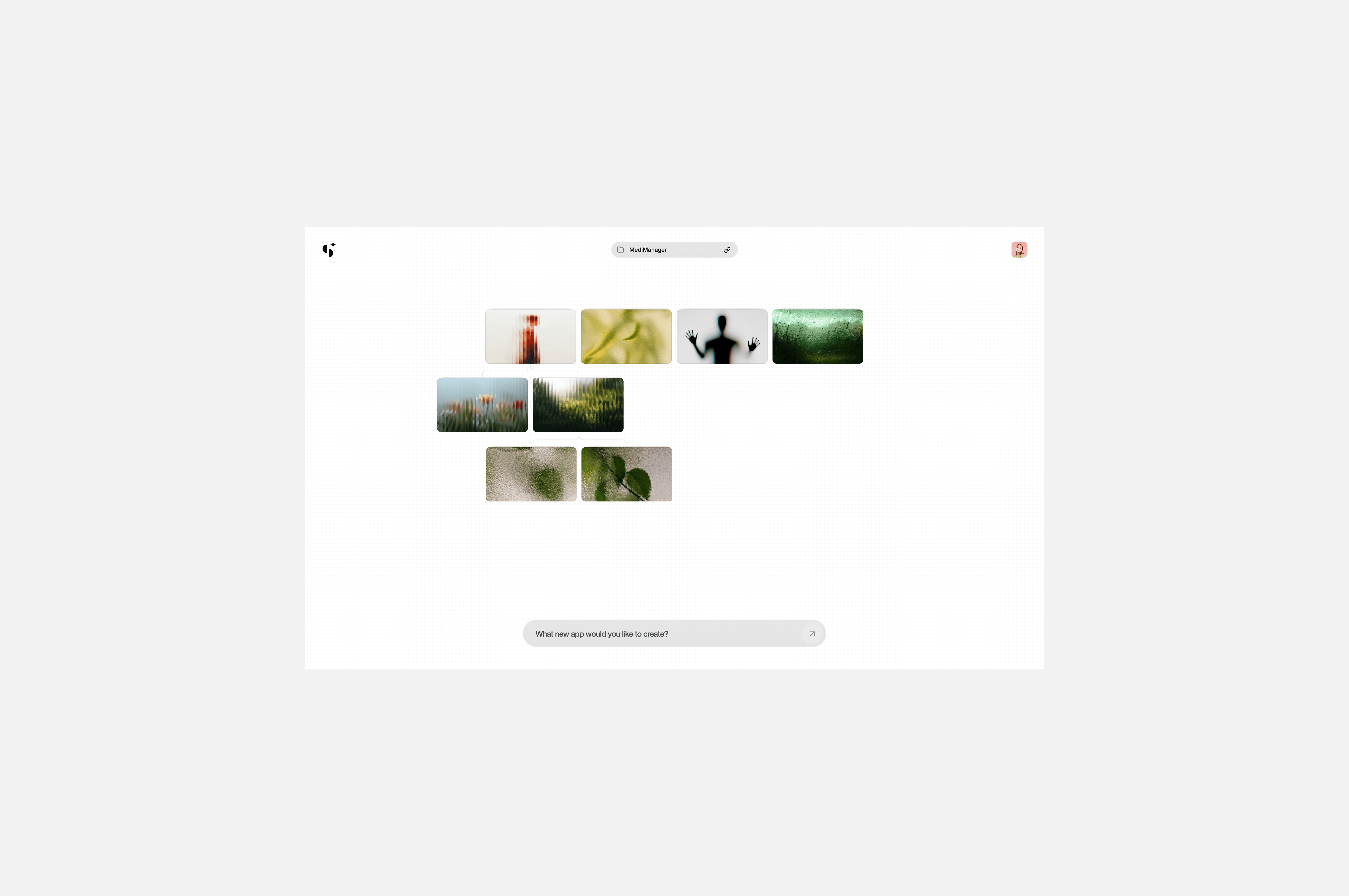
We intentionally leaned into a guided, option-based starting point as a strategic differentiator from other text-to-app platforms, which often push users into a single generated result and expect them to wrestle it into shape.

Instead, Spawn generates four distinct directions up front, so you can quickly pick what resonates rather than debug an interpretation you never wanted.

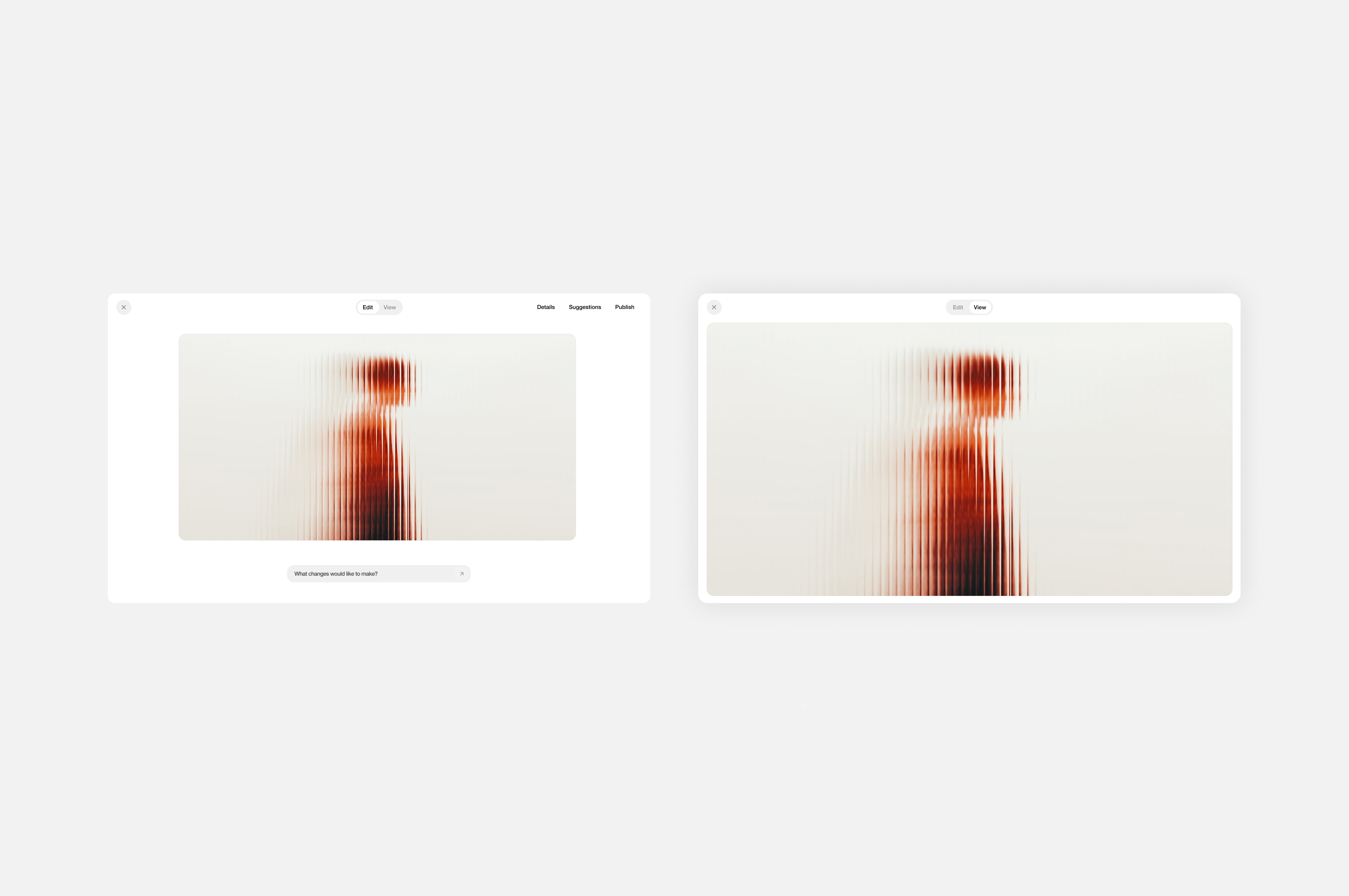
From there, creation becomes iterative instead of intimidating: refine the prompt, regenerate specific parts, and evolve the build in tight loops.
The Pivot
As we shipped and watched real behavior emerge, it became clear that apps weren’t being adopted in the way we expected. Users weren’t coming to Spawn with a broad intent to create utility or productivity experiences—they were consistently using the platform to make games.

The strongest signals showed up in what people chose to build, what they shared, and what others actually spent time playing.

So we made the call to pivot. Instead of trying to force adoption across many app categories, we doubled down on gaming as the primary use case, narrowed the narrative, and reworked onboarding to get users to a game-specific “first win” faster